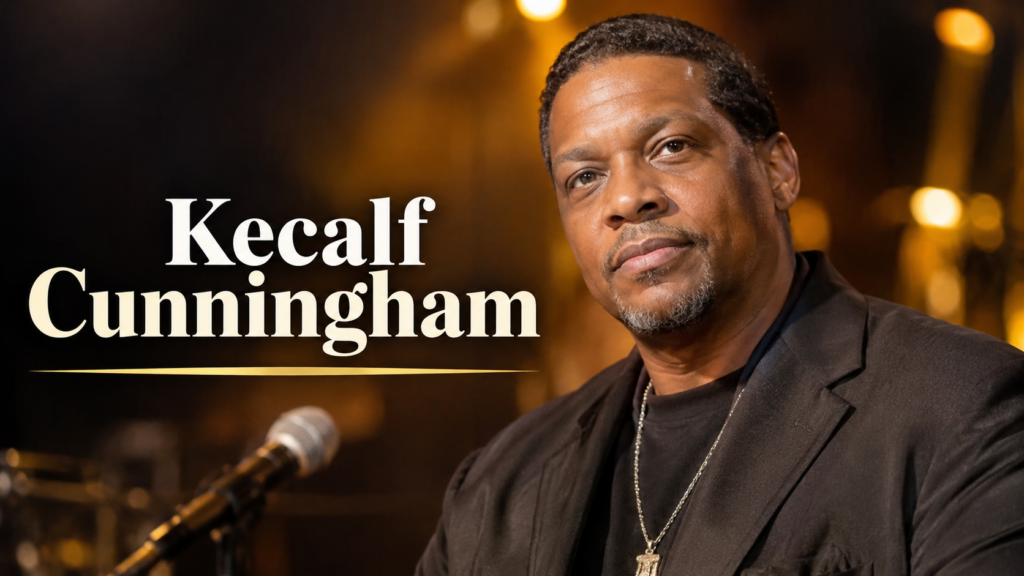
Growing up as the son of one of the greatest singers in music history comes with a unique kind of attention. For Kecalf Cunningham, being the youngest son of Aretha Franklin meant having a close connection to a woman whose voice influenced generations. Yet his own interests took him in a different musical direction, allowing him to develop an identity beyond his mother’s extraordinary reputation.
Known for his involvement in Christian hip-hop and gospel music, Kecalf has explored songwriting and performing while maintaining a strong connection to his family. He has also experienced the challenges that come with protecting the memory and legacy of a celebrated parent.
Although he generally keeps his personal life private, his musical interests, family background, and public involvement in matters concerning Aretha Franklin have made his story interesting to many readers.
The Family Story Behind His Name
Kecalf Cunningham was born in March 1970 to Aretha Franklin and Ken Cunningham. His name carries a personal meaning because it combines elements of his parents’ names, Ken E. Cunningham and Aretha Louise Franklin.
His father worked as Aretha’s road manager, and their relationship became part of the singer’s personal history. Although the couple did not marry, they shared a son who would later develop an interest in music.
Kecalf was the youngest of Aretha Franklin’s four sons. His older brothers are Clarence Franklin, Edward Franklin, and Ted White Jr., also known as Teddy Richards.
Music was an important part of the family environment. His mother was already building an extraordinary career, performing for audiences and recording songs that would eventually become classics.
However, growing up in a famous household did not mean that Kecalf had to follow exactly the same professional direction. Instead, he developed an interest in a different musical style.
How Music Became Part of His Own Identity
Aretha Franklin’s influence on American music was enormous, but Kecalf eventually explored a sound that reflected his own interests.
He became associated with Christian rap and gospel hip-hop, genres that combine contemporary rhythms with messages connected to faith and spirituality.
This musical direction gave him an opportunity to express himself without simply repeating the soul and R&B style that had made his mother famous.
Christian hip-hop also offered a way to bring religious themes into modern music. Through this approach, Kecalf developed an artistic identity connected to gospel culture and rap performance.
His musical journey benefited from having a mother who understood the entertainment industry. Aretha reportedly supported his early career and helped him with business matters.
Her experience gave him access to guidance from someone who knew the realities of professional music. At the same time, he had to develop his own style and establish himself through his creative work.
Sharing the Stage With Aretha Franklin
One of the memorable aspects of Kecalf’s musical life has been the opportunity to perform alongside his mother.
Their appearances offered audiences a chance to see a more personal side of Aretha Franklin. She was not only an internationally recognized singer but also a mother who shared her passion for music with her children.
In 2008, Kecalf performed with Aretha at Radio City Music Hall in New York. The appearance became a notable moment in their musical connection.
Performing together allowed him to experience the stage alongside an artist whose career had influenced generations of musicians.
He also attended events celebrating his mother’s achievements. Following her death, he remained connected to tributes recognizing her influence on gospel and soul music.
In September 2018, he attended the Kennedy Center’s Evolution of Gospel: A Tribute to Aretha Franklin in Washington, D.C.
His Work as a Songwriter
Kecalf’s relationship with music has also included songwriting.
One of his known contributions is connected to “New Day,” a song featured on Aretha Franklin’s 2011 album A Woman Falling Out of Love.
The project provided another opportunity for him to contribute creatively to music associated with his mother.
Songwriting requires a different approach from performing. It involves developing ideas, shaping lyrics, and finding ways to communicate a message through music.
His involvement in this area shows that his interests have extended beyond live performances.
In a 2025 appearance on the Wedding Weeds Podcast, Kecalf also discussed his music, Christian hip-hop, and songwriting experiences. The conversation offered listeners additional insight into his creative interests and his connection with music.
His Children and the Next Generation of the Franklin Family
Outside his musical activities, Kecalf has a family of his own. He is a father to several children, including Jordan, Victorie, and Grace.
His children have developed their own interests, with music and other creative activities appearing in different parts of their lives.
His son Jordan, also associated with the name Jonah, has pursued music. This connection suggests that the family’s interest in artistic expression has continued into another generation.
His daughters have also been connected with creative interests, including fashion and education.
For Kecalf, family represents an important part of his life beyond his connection to the entertainment industry.
Being the son of Aretha Franklin meant growing up around a remarkable musical legacy. Now, as a father, he is part of the generation introducing that family history to his own children.
Although public information about his household remains limited, his family’s connection to music continues to attract attention.
Why He Spoke Out About Films About Aretha Franklin
Aretha Franklin’s death in August 2018 brought renewed attention to her extraordinary life. Her music remained popular, and filmmakers began developing projects that explored her personal and professional journey.
Two productions received considerable attention: Respect, the 2021 film starring Jennifer Hudson, and Genius: Aretha, a television series about the singer’s life.
Kecalf expressed concerns about how his mother and family were represented in these productions.
He questioned the lack of communication with Aretha’s children and grandchildren during the process of telling her story.
His criticism reflected a wider issue involving films based on real people. While filmmakers often rely on historical research and public records, family members may have personal knowledge that they believe should be considered.
For Kecalf, the subject was particularly meaningful because Aretha was not simply a public figure. She was his mother.
His comments showed that preserving her memory involved more than celebrating her achievements. It also meant caring about how her personal experiences were presented to future audiences.
The Legal Dispute Over His Mother’s Estate
Following Aretha Franklin’s death, questions arose about the future of her estate.
The situation became complicated when handwritten wills were discovered at her home in Michigan. Two documents, dated 2010 and 2014, became central to disagreements among her sons.
The 2014 document was especially important because it was reportedly found inside a notebook among the cushions of a sofa.
Kecalf became closely involved in the legal proceedings surrounding the documents.
In July 2023, a Michigan jury determined that the handwritten 2014 will was valid. The decision recognized it as Aretha’s controlling will rather than the earlier 2010 document.
The 2014 will included provisions concerning Kecalf and his children, including the family property in Bloomfield Hills, Michigan.
The dispute attracted widespread attention because of Aretha’s cultural importance and the value of her estate.
For the family, however, the proceedings also concerned understanding and honoring the wishes she had left behind.
A Personal Connection to an Extraordinary Musical Legacy
Kecalf Cunningham has lived much of his life connected to a musical name recognized around the world. However, his story includes more than his relationship with Aretha Franklin.
His interest in Christian hip-hop, songwriting, and live performances reflects his own creative direction. His family life represents another important part of his identity, while his public comments about his mother demonstrate how seriously he takes the responsibility of protecting her memory.
Aretha Franklin’s influence continues through her recordings, performances, and the artists she inspired. For Kecalf, that legacy is also deeply personal.
He experienced her as a mother, shared musical moments with her, and continues to be part of the family history behind one of America’s most celebrated voices.
His life reflects the experience of carrying a famous family name while finding a personal path through music, fatherhood, and the lasting connection to a remarkable mother.