
Biography
Hugo Bachega Nationality: Brazilian-British Identity

Introduction
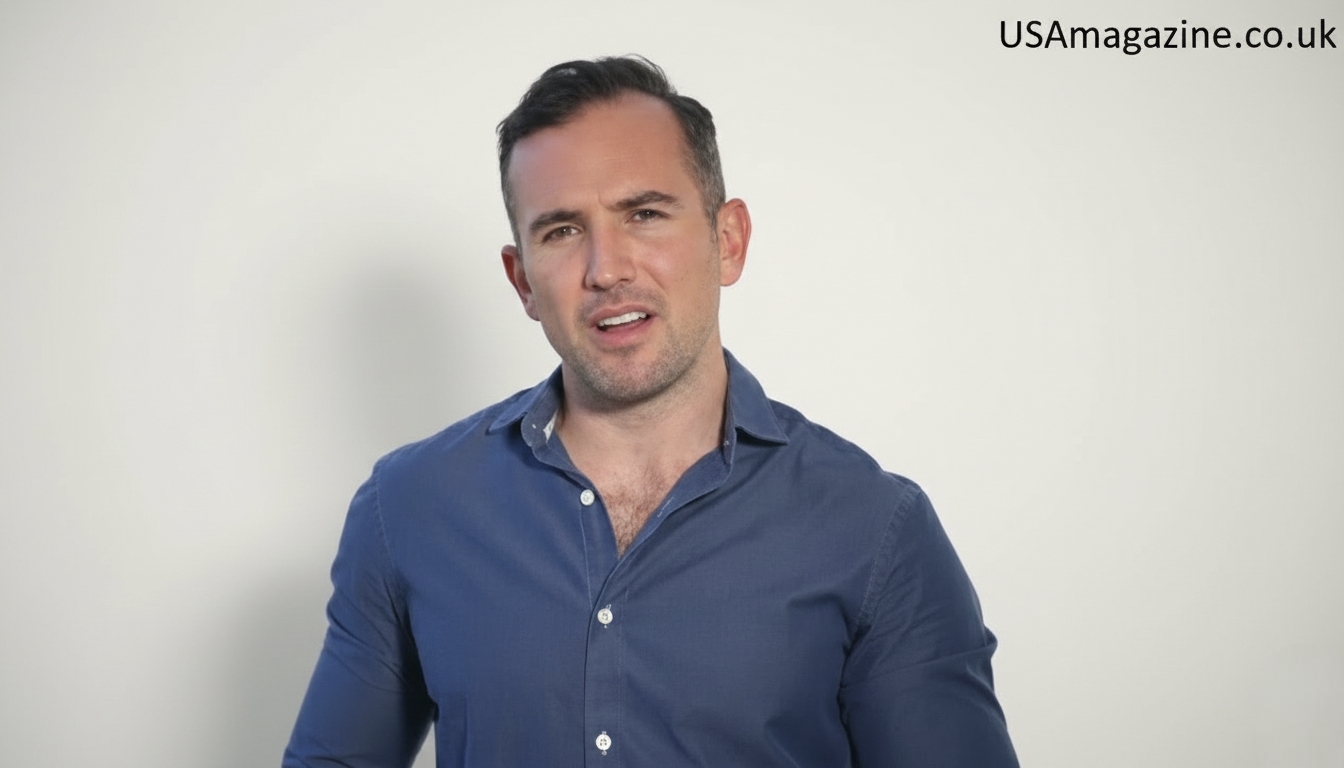
Hugo Bachega is a prominent international journalist best known for his work as a correspondent with BBC News, where he covers some of the world’s most complex and sensitive stories from conflict zones and politically unstable regions. Viewers frequently notice his clear, neutral delivery and international presence and naturally become curious about his background and, in particular, his nationality. Over time, this curiosity has led to ongoing online debates about whether he should be described as Brazilian, British, or a blend of both, turning his nationality into one of the most searched aspects of his biography. Understanding his roots and professional journey helps clarify not only where he comes from, but also how his multicultural identity shapes his reporting style and the way global audiences relate to his work.
Hugo Bachega’s Nationality
Most credible biographical profiles describe Hugo Bachega as a Brazilian-born journalist who has developed a strong professional and cultural connection with the United Kingdom through his long-standing role at the BBC. Several outlets explicitly refer to him as a “Brazilian-born British journalist,” capturing both his origin in Brazil and his later integration into British media and society. Some reports go further and state that he holds dual nationality, Brazilian and British, emphasizing that he was born in Brazil and later acquired British citizenship, though not all sources agree on the formal legal status of this dual identity. Even where official documentation is not publicly available, the consistent description across professional profiles is that his identity is best understood as Brazilian by birth, closely tied to Britain by career and residence, giving him a genuinely binational profile in the public eye.
Will You Check This Article: Damien McKiernan: From New Rory To Cult Comedy Star
Brazilian Roots and Early Life
Hugo Bachega’s story begins in Brazil, where he was born and raised before moving into international journalism. Biographical summaries regularly mention that he was born in São Paulo, Brazil, although many note that his exact date of birth is not publicly disclosed and usually estimate his age range rather than providing a specific year. Growing up in Brazil gave him firsthand exposure to the political, economic, and social realities of a major Latin American nation, experience that later proved valuable when he reported on regions facing inequality, political unrest, or rapid change. His Brazilian upbringing also contributed to his language skills, with Portuguese as a native language and later the addition of other languages that support his international reporting.
Education and Path into Journalism
For his higher education, Hugo Bachega studied media and journalism at the Pontifical Catholic University of São Paulo, one of Brazil’s respected academic institutions. This academic background gave him a structured understanding of news writing, media ethics, and political communication that would underpin his later work in major news organizations. During his university years, he became actively involved in student journalism and related projects, where he practiced analyzing political events and explaining complex issues in accessible language—skills that remain visible in his concise, contextualized reporting style on television. The combination of formal training and early practical experience created a strong foundation for a career that would soon move from local news to global conflict zones.
Early Career at Reuters
Hugo Bachega’s professional journey began at Reuters in São Paulo, where he started out as an intern and quickly progressed by demonstrating his ability to cover both local and international stories. At Reuters, he gained hands-on experience in real-time news gathering, wire-service writing, and fast, accurate reporting—skills essential for modern international correspondents. Covering political developments and economic stories from Brazil helped him learn how national events connect to global trends, a perspective that later became central to his reporting for wider audiences. His performance at Reuters established his reputation as a capable young journalist and opened the door to opportunities with one of the most influential broadcasters in the world, the BBC.
Transition to BBC News
After his initial years at Reuters, Hugo Bachega joined BBC News and moved into the demanding world of international broadcasting. At the BBC, he first worked across political and international stories before assuming more specialized roles that placed him at the center of major global events. Over time he became known not just as a reporter but as a trusted correspondent who could explain complex conflicts and humanitarian crises in a calm, clear, and impartial tone. His integration into the BBC’s newsroom in the United Kingdom reinforced his association with British media and contributed to the widespread description of him as a Brazilian-born journalist working within a British institutional framework
Middle East and Conflict Reporting
One of the most defining aspects of Hugo Bachega’s career is his extensive reporting from the Middle East and other conflict zones. He has been deployed to cover major events such as the Egyptian uprisings, the Syrian refugee crisis, and the war in Ukraine, often reporting directly from the ground in dangerous and rapidly changing environments. During the Ukraine-Russia conflict, he gained particular visibility when he appeared on BBC News reporting live from Kyiv, including moments when explosions were heard in the background, illustrating the immediacy and risk of his work. His coverage across the Middle East, South America, and Europe reflects not only his linguistic and cultural adaptability but also the trust his organization places in his judgment under pressure.
British Integration and Professional Identity
While his roots are firmly in Brazil, Hugo Bachega has spent much of his professional life in the United Kingdom, where he is frequently described in institutional and media contexts as a Brazilian-born British journalist. Working within British media institutions such as the BBC has shaped his professional identity in ways that go beyond nationality labels, including the adoption of editorial standards, presentation styles, and newsroom cultures associated with the UK. His presence on British television screens as a BBC correspondent and his residence and career base in the UK contribute strongly to public perceptions that associate him with Britain as much as with Brazil. For many viewers, this dual association is precisely what makes his reporting feel both international and grounded in a particular journalistic tradition.
Dual Nationality and Public Confusion
The question of whether Hugo Bachega holds dual nationality—Brazilian and British—has been the subject of ongoing online speculation. Some biographical articles clearly state that he has both Brazilian and British nationality, arguing that his Brazilian birth and later British status reflect his multicultural identity and cross-border career. Other profiles take a more cautious approach, confirming that he is Brazilian by birth and emphasizing that there is no fully verified public documentation confirming British citizenship, even if his professional life is deeply embedded in the UK. In practice, the most balanced view is to recognize that he is widely seen as Brazilian-born and closely linked to Britain, with the exact legal details of his citizenship remaining private while his public identity is unmistakably binational.
How Nationality Shapes His Reporting
Hugo Bachega’s Brazilian background and British professional integration combine to give him a distinct perspective on international news. His experience growing up in Brazil, a country marked by social inequality, political volatility, and significant regional diversity, helps him approach stories about conflict, migration, and human rights with a sense of empathy and historical awareness. At the same time, his work within British media exposes him to a global audience and a tradition of public-service journalism that values impartiality and detailed context. This dual influence often results in reporting that balances human stories with structural analysis, allowing viewers to understand both the personal impact of war or displacement and the broader political forces driving events.
Language Skills and International Reach
Multiple profiles describe Hugo Bachega as multilingual, highlighting his fluency in Portuguese and Spanish and mentioning his ability to communicate in conversational Arabic. These language skills are particularly valuable for a correspondent who covers Latin America, the Middle East, and other regions where English is not the primary language. Being able to speak directly with local communities, officials, and experts without always relying on interpreters allows him to capture nuance, verify details, and earn trust in sensitive situations. This linguistic versatility, combined with his Brazilian and British identity, reinforces his role as a truly international journalist who can move between cultures with relative ease.
Professional Recognition and Awards
Hugo Bachega’s commitment to frontline reporting has earned him recognition within the journalism community. Some biographical summaries attribute to him honors such as a BBC journalism award for international reporting and distinctions from broader broadcasting associations, reflecting the high regard for his work in conflict and crisis coverage. Such recognition usually follows years of consistently accurate, insightful, and often risky reporting, particularly from war zones and politically unstable regions. These acknowledgments support his status as one of the respected correspondents within BBC News, further entrenching his profile as a Brazilian-born reporter who has made a significant impact in British and global media.
People also like this: Maisie Adams Husband: Inside Her Marriage To Mike Dobinson
Personal Privacy and Limited Public Details
Despite his visibility on screen, Hugo Bachega maintains a relatively private personal life, and many specific details—such as his exact date of birth—are not widely disclosed in public records or official biographies. Articles typically describe his age only in approximate terms, often placing him in a general age bracket rather than giving a precise birthday. This limited disclosure is common among journalists who prefer to keep personal information separate from their public role, especially when they work in high-risk environments where excessive exposure could present security concerns. Social media profiles and interviews tend to focus on his work, travels, and reporting experiences rather than on private life, reinforcing an image of a professional whose public identity is defined foremost by journalism rather than by personal details.
Conclusion
In summary, Hugo Bachega’s nationality can be understood as a blend of Brazilian roots and British professional identity, commonly described as Brazilian-born and closely tied to the United Kingdom through his role at the BBC. While some sources explicitly state that he holds both Brazilian and British nationality and others limit themselves to confirming that he is Brazilian by birth, all agree that his life and career have unfolded across these two cultures. His education in São Paulo, early work at Reuters, and later prominence as a BBC correspondent—particularly in the Middle East and other conflict zones—have shaped him into a journalist whose perspective is global, whose reporting is trusted, and whose multicultural background is central to his professional identity.
FAQs
Is Hugo Bachega Brazilian or British?
Most reliable profiles describe Hugo Bachega as Brazilian by birth, with many referring to him as a Brazilian-born journalist who works in British media and is often labeled Brazilian-born British.
Does Hugo Bachega have dual nationality?
Some sources state that he holds both Brazilian and British nationality, while others emphasize his Brazilian birth and note that dual citizenship has not been officially confirmed in public records.
Where was Hugo Bachega born?
Biographical articles report that he was born in Brazil, frequently specifying São Paulo as his birthplace, though detailed personal documentation is not widely available.
What is Hugo Bachega’s role at the BBC?
He works as a BBC News correspondent, known especially for his coverage of international conflicts and political crises in regions such as the Middle East, Europe, and South America.
How does his nationality influence his journalism?
His Brazilian upbringing and integration into British media give him a multicultural outlook, allowing him to connect with diverse audiences and report on global events with both local sensitivity and international context.
Introduction
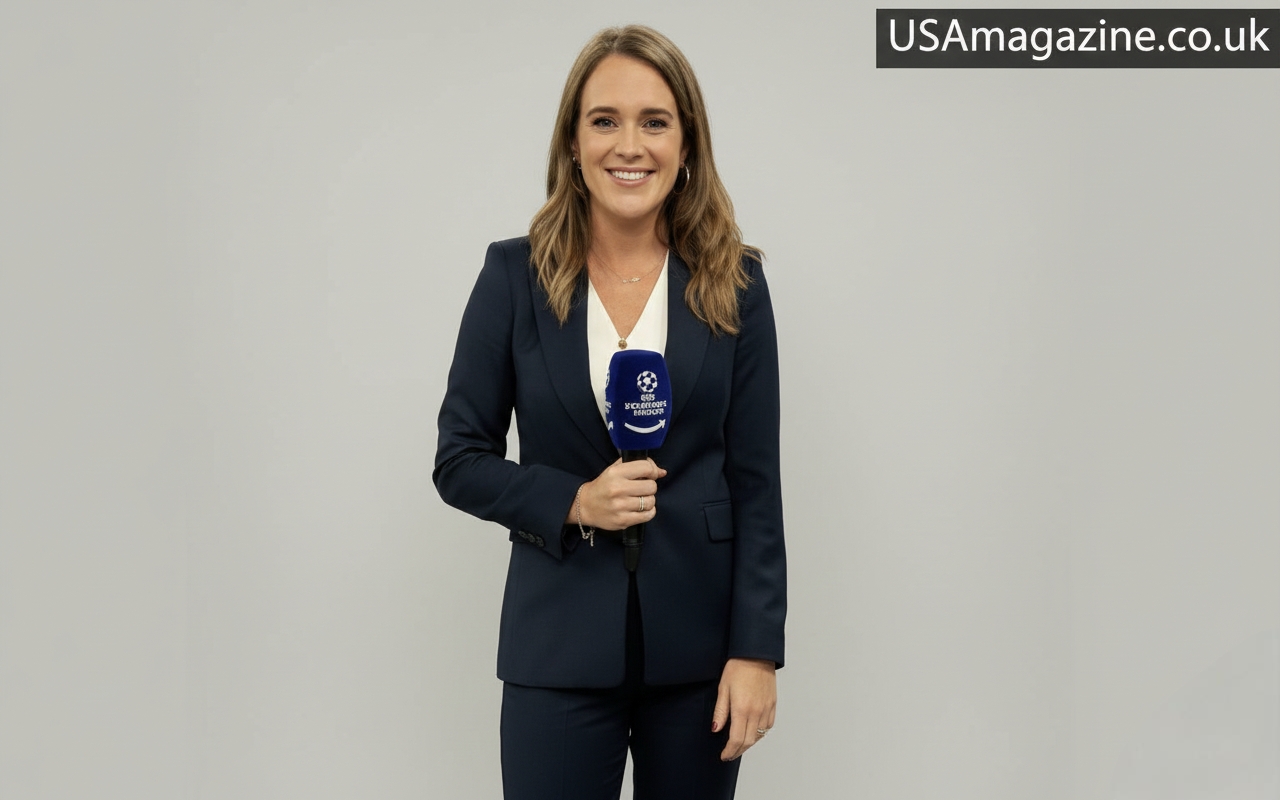
Alex Aljoe has become one of the most distinctive new voices in modern sports broadcasting, combining sharp journalism with an exceptional command of multiple languages. Working across major networks such as Sky Sports News, Premier League Productions, Amazon Prime, DAZN, and UEFA, she has built a reputation as a versatile presenter and reporter trusted by global football audiences. Her rise illustrates how linguistic skills, strong academic preparation, and consistent on-screen professionalism can create a powerful brand in an increasingly international sports media landscape.
Born in the United Kingdom in 1991, Aljoe’s early interest in languages and sport laid the foundations for a career that now spans top European leagues and major international competitions. She established herself initially through Real Madrid TV before moving into high-profile roles in the UK, quickly becoming a familiar presence for fans following the Premier League and UEFA tournaments. Today, she is widely recognized not only for her presenting talent, but also for her ability to switch seamlessly between English, Spanish, Italian, Portuguese, and French during live broadcasts and interviews.
Early life and education
Alex Aljoe was born on 17 October 1991 in the United Kingdom, where she grew up with a strong academic focus and a particular aptitude for languages. At school she excelled across a range of subjects, later choosing to specialize in modern languages, which would become central to her professional identity.
She attended Durham University, studying Spanish and Italian and earning a sports scholarship while refining her linguistic abilities. This combination of academic excellence and sporting interest positioned her well for a media career focused on football and international sport. Determined to move into broadcast journalism, she went on to complete an MA in Television Journalism with Distinction at City, University of London, in 2015, gaining technical and editorial skills that complemented her language background.
Will You Check This Article: Alexander Kutner: A Life Shaped by Legacy, Ambition, and Privacy
First steps in sports journalism
Aljoe’s first major break in sports broadcasting came with Real Madrid TV, where she initially worked as a reporter and presenter. This role exposed her to elite football from the outset, giving her experience covering one of the most high-profile clubs in the world and reporting from the club’s training complex and stadium.
At Real Madrid TV she presented live chat shows, news bulletins, and pitchside segments, conducting interviews with players in both English and Spanish. Working in Madrid allowed her to apply her language skills under live broadcast pressure, and it proved decisive in shaping her style as a confident, multilingual on-air journalist. The experience also helped her understand how to communicate with global audiences following a club with fans in many countries.
Building presence in UK media
After her time in Spain, Aljoe returned to the UK and began appearing across several British sports outlets, including Chelsea TV, ITV Sport, BT Sport, and Sky News. These roles broadened her portfolio beyond one club and introduced her to different production styles, from club channels to mainstream newsrooms.
Working with these organisations allowed her to cover domestic football, feature stories, and live event coverage while refining her on-screen presence for English-language audiences. The variety of assignments strengthened her adaptability, preparing her for larger platforms and more demanding live environments. This period was crucial in transforming her from a club-channel reporter into a broadcaster capable of fronting national and international sports programming.
Breakthrough with major broadcasters
Aljoe’s major breakthrough arrived through her work with Premier League Productions and Sky Sports News, where she became a regular face for football fans in the UK and abroad. On these platforms she has anchored news shows, hosted studio programmes, and contributed to matchday coverage that is distributed to audiences worldwide.
In parallel, she took on high-profile roles with Amazon Prime and DAZN, appearing in coverage of major football fixtures as well as other sports such as motorsport and boxing. These opportunities strengthened her international profile and showed that she could transition smoothly between traditional television and newer streaming platforms. Working with UEFA further reinforced her presence around top European competitions, including Champions League coverage and other major tournaments.
Multilingual skills and on-air impact
One of the most distinctive aspects of Alex Aljoe’s work is her ability to conduct interviews and present segments in several languages during the same broadcast. She is known for speaking English, Spanish, Italian, Portuguese, and French, often switching between them to match the language of the players or coaches she interviews.
This multilingual capability has generated particular attention on social media and among viewers, with clips of her interviews frequently shared and praised for their fluency and professionalism. Moments where she translates or follows up in multiple languages in real time have been highlighted as examples of how broadcasters can connect more directly with players and international audiences. The result is a style of reporting that feels more inclusive and authentic to global football culture.
Coverage of major events
Throughout her career, Aljoe has reported from a series of major events across club and international football. Her work has included coverage of the Premier League, UEFA Champions League, and other European competitions, often from inside stadiums and mixed zones where access and quick reactions are crucial.
She has also been involved in reporting on tournaments outside mainstream men’s football, including the Women’s Lacrosse World Cup earlier in her career, demonstrating range beyond one sport. In addition, her assignments with Amazon Prime and DAZN have extended to boxing and motorsport broadcasts, showing that she can adapt her interview style and preparation to very different sporting environments. This breadth of coverage reinforces her status as a versatile sports journalist rather than a presenter tied to a single competition.
On-screen style and professionalism
Viewers and colleagues frequently highlight Aljoe’s calm, composed on-screen manner and her ability to build rapport quickly with players and coaches. Her interviewing style blends clear, concise questioning with space for athletes to express themselves, which is particularly valuable in post-match contexts where emotions run high.
The professionalism visible in her live work is underpinned by strong preparation and editorial awareness, shaped by her MA in Television Journalism and early newsroom experiences. She adapts her tone to different formats, ranging from more informal tunnel chats to structured studio analysis, while maintaining a consistent focus on clarity and respect for guests. This combination has helped her earn trust from production teams and viewers across multiple networks.
Role model and industry influence
Because of her multilingualism and prominent roles across major networks, Alex Aljoe has become a reference point for many aspiring sports journalists, particularly women entering a still male-dominated field. Articles profiling her career often emphasise how she has used language skills and persistence to break into high-visibility positions in sports media.
Her visibility also contributes to wider discussions about diversity in sports broadcasting, not only in terms of gender but also linguistic and cultural representation. By conducting interviews in players’ native languages and connecting with fans in different countries, she represents a more global approach to coverage that many broadcasters are now trying to emulate. This influence extends through her social media presence, where highlights of her work reach audiences who may never see the full broadcast.
People also like this: Alex Aljoe: Multilingual Star Of Sports Media
Future prospects
Given her age, experience, and expanding portfolio, Aljoe appears well positioned for even more prominent roles within sports broadcasting over the coming years. As streaming platforms continue to grow alongside traditional television, her ability to operate comfortably across both types of outlets is likely to remain a key advantage.
There is also potential for her to front more major tournament coverage, long-form features, or documentary-style projects that draw on her access and language skills. With interest in multilingual, globally accessible sports content increasing, broadcasters have strong incentives to feature presenters who can connect multiple markets, and Aljoe fits that profile closely. Her trajectory so far suggests a career that will continue to evolve as the industry changes.
Conclusion
Alex Aljoe journey from language-focused student to multilingual sports presenter illustrates how targeted education, early international experience, and consistent professionalism can combine to create a distinctive voice in modern sports journalism. By working across Real Madrid TV, Chelsea TV, ITV, BT Sport, Sky Sports News, Premier League Productions, Amazon Prime, DAZN, and UEFA, she has developed a broad and influential presence in football media. Her ability to operate in five languages on air, connect with athletes from different backgrounds, and adapt to both television and digital formats positions her as one of the notable broadcasting figures of her generation.
FAQs
Who is Alex Aljoe?
Alex Aljoe is a British sports journalist and television presenter known for her multilingual work covering football and other sports for major broadcasters. She has appeared on Sky Sports News, Premier League Productions, Amazon Prime, DAZN, and UEFA coverage, among others.
What languages does Alex Aljoe speak?
Aljoe is widely reporter to speak English, Spanish, Italian, Portuguese, and French, which she uses regularly in interviews and live broadcasts. Her language skills allow her to speak directly with players and coaches in their native tongues and to translate during on-air segments.
Where did Alex Aljoe study?
She studied Spanish and Italian at Durham University, where she also received a sports scholarship. After that, she completed an MA in Television Journalism with Distinction at City, University of London, preparing her for a professional career in broadcast media.
Which networks has she worked for?
Over the course of her career, Aljoe has worked with Real Madrid TV, Chelsea TV, ITV Sport, BT Sport, Sky News, Sky Sports News, Premier League Productions, Amazon Prime, DAZN, and UEFA. These roles have included presenting studio programmes, reporting pitchside, and conducting post-match and feature interviews.
Why is Alex Aljoe considered influential?
She is considered influential because she combines strong journalistic skills with rare multilingual fluency in a high-profile area of sports broadcasting. Her work has helped demonstrate how language and cultural awareness can improve access to athletes and enhance coverage for international audiences.
-
 Biography2 days ago
Alex Aljoe: Multilingual Star Of Sports Media
-

 Celebrity2 days ago
Alexander Kutner: A Life Shaped by Legacy, Ambition, and Privacy
-

 Lifestyle2 days ago
ROX.com Premium Products Catalog – Your Ultimate Shopping Destination
-

 Celebrity2 days ago
Nikki Hakuta: Life, Family, and Inspiration Behind Ali Wong’s Daughter
-

 Celebrity2 days ago
Why Robert Peston Is Not On TV Tonight: Real Reasons Behind His Absence
-

 Celebrity2 days ago
Ben Shephard Wife Illness: Facts, Journey, and Family Strength
-

 Celebrity3 days ago
Jennifer Hageney: Crafting a Quiet Legacy in Flowers and Family
-

 Celebrity2 days ago
Patrick Christys Salary – What He Likely Earns as a GB News Star